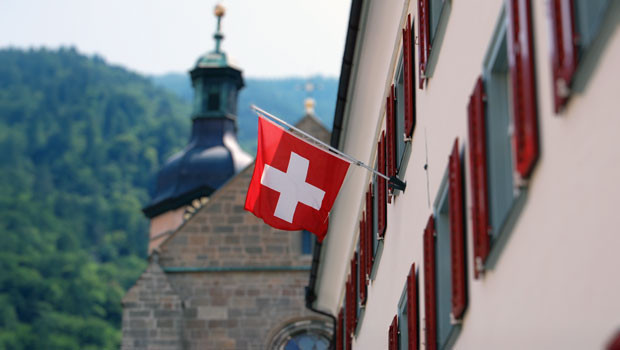
Source: Sharecast
The decision, which marked a third consecutive hold and was widely expected by economists, came as safe-haven flows linked to the escalating Middle East conflict have pushed the franc higher, raising concerns about its impact on inflation and economic activity.
SNB president Martin Schlegel said a “rapid and excessive appreciation of the Swiss franc poses a risk to price stability,” adding that the central bank’s “willingness to intervene in the foreign exchange market has increased.”
The central bank reiterated that currency strength can dampen inflation by lowering import prices and weigh on growth, effectively tightening financial conditions even with policy rates at zero.
The franc had risen around 2.5% this year and recently touched multi-year highs, though gains had been tempered by expectations of intervention.
While the SNB maintained its policy rate, it kept the option of negative interest rates available, albeit with a higher threshold for implementation.
For now, officials said they saw no need to reintroduce sub-zero borrowing costs, as inflation remained low but broadly in line with forecasts and economic growth held up.
Inflation projections were revised slightly higher in the near term, reflecting rising energy costs linked to the Middle East conflict.
The SNB said it now expected inflation to average 0.5% in 2026, up from a previous estimate of 0.3%, before settling at 0.5% in 2027 and 0.6% in 2028.
Despite the near-term increase, policymakers said medium-term inflationary pressures remain “virtually unchanged.”
Recent data showed consumer price growth edging up from 0.0% in November to 0.1% in February, driven in part by higher goods prices.
The central bank said it expected inflation to rise further in the coming months as energy costs fed through, though it remained within the range consistent with price stability.
It said the economic outlook had become more uncertain, with risks stemming primarily from global developments and the Middle East conflict.
The SNB warned that higher energy prices, supply chain disruptions and trade policy uncertainty could weigh on growth.
Swiss GDP was forecast to expand by around 1% in 2026, unchanged from previous estimates, before picking up to around 1.5% in 2027.
Policymakers emphasised that global conditions remained a key driver of the domestic outlook, noting that while growth was solid in late 2025, it could slow in the near term.
The bank added that it would continue to monitor the situation closely and stands ready to adjust policy as needed to ensure price stability.
Reporting by Josh White for Sharecast.com.